What is Gout or Gouty Arthritis?
Gout is a common and complex form of inflammatory arthritis characterized by sudden, severe attacks of pain, swelling, and tenderness in one or more joints, most often the joint at the base of the big toe.
It is caused by an underlying condition called hyperuricemia.
Main Causes
Gout develops when there is an excess of uric acid (also known as urate) in the blood, a condition called hyperuricemia.
- Uric Acid Formation: Uric acid is a normal waste product created when the body breaks down substances called purines. Purines are found naturally in the body and in many foods.
- Normal Excretion: Normally, uric acid dissolves in the blood, is filtered by the kidneys, and is then excreted in urine.
- Buildup: Hyperuricemia occurs when the body either:
- Produces too much uric acid (less common).
- Excretes too little uric acid through the kidneys (the most common cause).
- Crystal Formation: When uric acid levels are too high, it forms sharp, needle-like crystals of monosodium urate. These crystals settle in a joint, triggering a massive inflammatory reaction by the immune system, resulting in a sudden and extremely painful “gout attack.”
Signs & Symptoms
A gout attack is typically a sudden flare-up, often starting at night.
- Intense Joint Pain: Usually affects the big toe (called podagra), but can also strike the ankles, knees, elbows, wrists, and fingers. The pain is often described as excruciating and may be so severe that the slightest touch (like a bedsheet) is unbearable.
- Swelling and Redness: The affected joint becomes swollen, hot, and bright red.
- Limited Motion: Movement of the joint becomes restricted and difficult.
- Duration: An acute attack usually peaks within 12–24 hours and slowly subsides over a period of a few days to a couple of weeks, even without treatment.
Risk Factors
Factors that increase the level of uric acid in the body and thus increase the risk of gout include:
- Diet: Eating a diet rich in purines (red meat, organ meats, and certain seafood like shellfish) and consuming beverages high in fructose (sugary sodas).
- Alcohol: Consumption of alcohol, particularly beer and spirits, increases uric acid production and hinders its excretion by the kidneys.
- Weight: Being overweight or obese increases the body’s production of uric acid and makes it harder for the kidneys to eliminate it.
- Medical Conditions: Conditions like untreated high blood pressure, chronic kidney disease, diabetes, and metabolic syndrome increase the risk.
- Medications: Certain drugs, such as some diuretics (water pills) and low-dose aspirin, can raise uric acid levels.
- Genetics: A family history of gout can increase susceptibility.
If left untreated, gout can lead to:
- Recurrent Gout: Attacks become more frequent, last longer, and may affect multiple joints.
- Tophi: Deposits of urate crystals that form hard lumps under the skin, often around joints or on the earlobe. Tophi can cause joint damage and deformity.
- Kidney Stones: Uric acid crystals can collect in the urinary tract, leading to kidney stones.
Lifestyle management
1. Diet: Managing Purine and Fructose Intake
The goal of a gout diet is to limit foods that lead to high uric acid production while emphasizing foods that help the body excrete uric acid.
| Dietary Strategy | Do’s (Gout-Friendly) | Don’ts (Limit or Avoid) |
| Purines | Vegetable Proteins: Legumes (beans, lentils), tofu, and most vegetables (even high-purine ones like spinach) do not increase gout risk. | High-Purine Meats: Organ meats (liver, kidneys, sweetbreads) and game meats (venison, goose). Red Meat (beef, lamb, pork): Limit serving sizes. |
| Fats & Dairy | Low-Fat Dairy: Skim milk and low-fat yogurt may reduce uric acid levels and increase its excretion. Healthy Fats: Use vegetable oils like olive oil. | High-Fat Foods: Limit consumption of saturated fats found in high-fat dairy and excessive red meat. |
| Sweeteners | Complex Carbohydrates: Whole grains, rice, whole-wheat bread. Cherries: Both sweet and tart cherries have anti-inflammatory properties and may lower uric acid levels. | High-Fructose Foods: Sugary drinks (soda, fruit juices, sweetened tea) and foods with High-Fructose Corn Syrup. Fructose increases uric acid production. |
| Hydration | Water: Drink at least 8 glasses of water daily. Proper hydration helps the kidneys flush out uric acid. Coffee: Moderate coffee intake (4–6 cups/day) is associated with a lower risk of gout. | Alcohol: Beer and spirits are strongly linked to a higher risk of gout attacks. Alcohol hinders uric acid excretion and increases its production. Wine is considered less of a risk but should still be moderated. |
Lifestyle measures are an essential part of managing gout, as they directly address the underlying cause: high levels of uric acid (hyperuricemia).1 These measures are used in conjunction with medication to reduce the frequency and severity of gout attacks.
Here are the key lifestyle and dietary recommendations for gout management:
1. Diet: Managing Purine and Fructose Intake
The goal of a gout diet is to limit foods that lead to high uric acid production while emphasizing foods that help the body excrete uric acid.2
| Dietary Strategy | Do’s (Gout-Friendly) | Don’ts (Limit or Avoid) |
| Purines | Vegetable Proteins: Legumes (beans, lentils), tofu, and most vegetables (even high-purine ones like spinach) do not increase gout risk. | High-Purine Meats: Organ meats (liver, kidneys, sweetbreads) and game meats (venison, goose). Red Meat (beef, lamb, pork): Limit serving sizes. |
| Fats & Dairy | Low-Fat Dairy: Skim milk and low-fat yogurt may reduce uric acid levels and increase its excretion. Healthy Fats: Use vegetable oils like olive oil. | High-Fat Foods: Limit consumption of saturated fats found in high-fat dairy and excessive red meat. |
| Sweeteners | Complex Carbohydrates: Whole grains, rice, whole-wheat bread. Cherries: Both sweet and tart cherries have anti-inflammatory properties and may lower uric acid levels. | High-Fructose Foods: Sugary drinks (soda, fruit juices, sweetened tea) and foods with High-Fructose Corn Syrup. Fructose increases uric acid production. |
| Hydration | Water: Drink at least 8 glasses of water daily. Proper hydration helps the kidneys flush out uric acid. Coffee: Moderate coffee intake (4–6 cups/day) is associated with a lower risk of gout. | Alcohol: Beer and spirits are strongly linked to a higher risk of gout attacks. Alcohol hinders uric acid excretion and increases its production. Wine is considered less of a risk but should still be moderated. |
2. Weight Management
- Maintain a Healthy Weight: Being overweight causes the body to produce more uric acid and reduces the kidneys’ ability to excrete it, making weight loss a crucial measure.3
- Avoid Crash Diets: Rapid weight loss or fasting can temporarily increase uric acid levels and trigger a gout attack.4 Aim for slow, steady weight reduction through balanced eating and regular exercise.5
3. Physical Activity
- Regular, Low-Impact Exercise: Physical activity is vital for overall health and weight control.6 Choose activities that do not place heavy stress on the joints, such as walking, swimming, or cycling.
- Avoid Intense Exertion: Strenuous or intense exercise, especially during a gout flare, can increase uric acid levels and should be avoided.
4. General Management
- Stay Hydrated: This is crucial at all times, but particularly during a flare-up.
- During a Gout Attack:
- Rest the affected joint and keep pressure off it (e.g., keep bedsheets lifted off the big toe).
- Apply Ice or a cold compress for 15–20 minutes several times a day to reduce pain and swelling.7
- Manage Other Conditions: Control chronic conditions like hypertension, diabetes, and high cholesterol, as they are often associated with high uric acid levels and gout risk.
Common herbs useful in Gout
In Ayurveda, Gout is managed under the umbrella of Vatarakta (literally meaning Vata vitiated by Rakta or blood). The Ayurvedic treatment aims to detoxify the blood, balance the aggravated Vata and Pitta doshas, and promote the elimination of uric acid.
The herbs and classical formulations used for gout focus on being Mutrala (diuretic), Rakta Shodhaka (blood purifying), and Vata/Pitta Shamana (pacifying Vata and Pitta).
Here are some of the most effective Ayurvedic herbs and formulations used for Gout (Vatarakta):
Key Herbs for Uric Acid Management
| Ayurvedic Name | Botanical Name | Key Action for Gout |
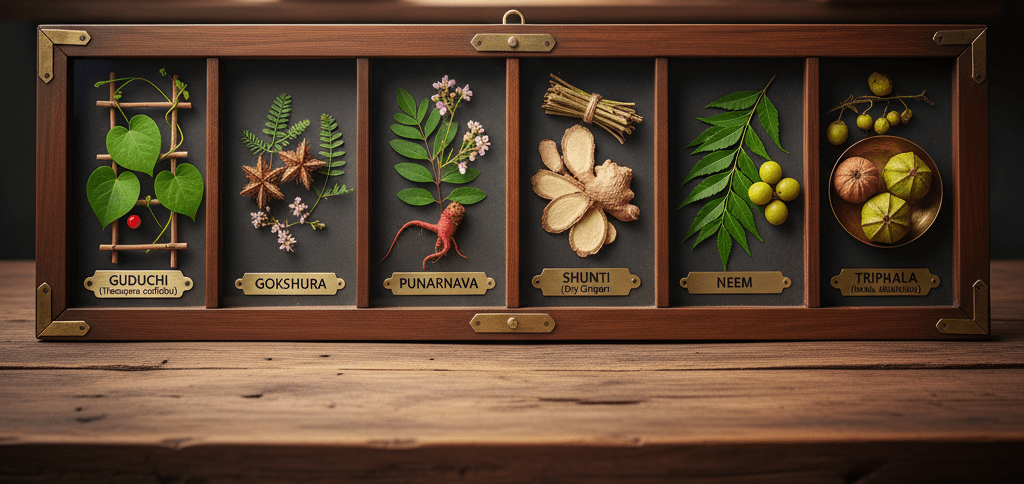
| Guduchi (Giloy) | Tinospora cordifolia | Blood Purifier & Immunomodulator. Highly effective in neutralizing and reducing excess uric acid levels. It also has strong anti-inflammatory and detoxifying properties. |
| Gokshura | Tribulus terrestris | Diuretic (Mutrala). Primarily known for supporting kidney and urinary tract health. It helps increase urine output, effectively flushing out excess uric acid from the body. |
| Punarnava | Boerhavia diffusa | Diuretic & Rejuvenating. Helps reduce swelling and inflammation by removing excess fluids and waste products, including uric acid crystals, and supports kidney function. |
| Shunthi (Dry Ginger) | Zingiber officinale | Deepana & Pachana (Digestive). Used to improve metabolism and digestion, which is crucial for preventing the initial formation of toxins. It also has potent anti-inflammatory effects. |
| Triphala | (Amla, Haritaki, Bibhitaki) | Detoxifier & Cleanser. This compound of three fruits promotes healthy bowel movement and detoxification, aiding in the overall removal of metabolic waste. |
| Neem | Azadirachta indica | Blood Purifier. Its bitter properties are traditionally used to cleanse the blood and reduce inflammation associated with the flare-up. |
 FAMILY DOCTOR ONLINE