What is Osteoarthritis?
Osteoarthritis (OA) is the most common form of arthritis, a degenerative joint disease that affects millions of people worldwide. It occurs when the protective cartilage that cushions the ends of your bones wears down over time. This can cause the bones to rub together, leading to pain, stiffness, and loss of movement. While it’s often associated with aging, it’s not an inevitable part of it and can affect younger people as well.
Causes of Osteoarthritis
While the exact cause isn’t fully understood, a combination of factors can contribute to its development. The most common risk factors include:
- Age: The risk of OA increases with age.
- Obesity: Carrying extra weight puts more stress on weight-bearing joints like the hips and knees, and fat tissue produces proteins that can cause harmful inflammation.
- Joint injuries: Injuries from sports or accidents can increase the risk of OA, even many years after the initial injury.
- Repetitive stress: Jobs or sports that place repetitive stress on a particular joint can lead to OA.
- Genetics: Some people may inherit a tendency to develop the condition.
- Gender: Women are more likely to develop OA, especially after age 50.
Signs & Symptoms
The symptoms of osteoarthritis typically develop slowly over time and can vary from person to person. Common signs include:
- Pain: Affected joints may ache or hurt during or after movement.
- Stiffness: This is often most noticeable upon waking up or after a period of inactivity.
- Tenderness: The joint may feel tender when light pressure is applied.
- Loss of flexibility: You may not be able to move your joint through its full range of motion.
- Grating sensation: You might feel a grating sensation or hear popping or crackling sounds when you use the joint.
- Bone spurs: Extra bits of bone can form around the joint, feeling like hard lumps.
- Swelling: Soft tissue inflammation around the joint can cause swelling.
Common herbs useful in osteoarthritis
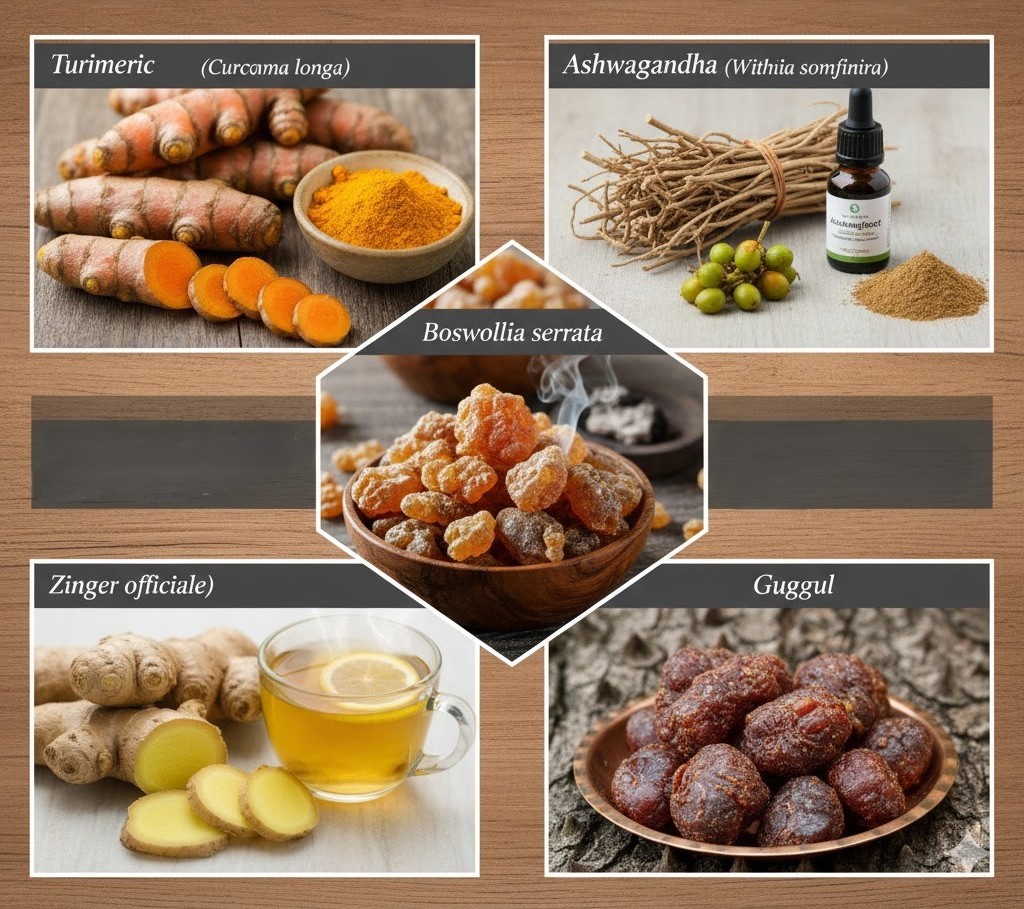
Some of the most common Ayurvedic herbs used to help with osteoarthritis are:
Turmeric (Curcuma longa) – The active compound in turmeric, curcumin, has strong anti-inflammatory and antioxidant properties that may help to reduce joint pain and swelling.
Ashwagandha (Withania somnifera) – Also known as Indian ginseng, this herb is an adaptogen that may help the body cope with stress, which can worsen pain. It also has anti-inflammatory properties that can support joint tissue repair.
Boswellia (Boswellia serrata) – This resin, also known as Indian frankincense, contains boswellic acids that block the production of compounds that cause inflammation, helping to improve joint flexibility and reduce stiffness.
Ginger (Zingiber officinale) – Ginger has anti-inflammatory and pain-relieving effects. The active compounds, gingerols, can help reduce joint pain and inflammation.
Guggul (Commiphora wightii) – Derived from the mukul myrrh tree, guggul contains guggulsterones, which have anti-inflammatory properties that help to reduce joint inflammation and support healthy cartilage.
Preventive Measures and Lifestyle Advice
While you can’t always prevent osteoarthritis, there are several lifestyle choices that can help reduce your risk or slow its progression.
- Maintain a Healthy Weight: Losing excess weight is one of the most effective ways to reduce stress on your joints. Even a small amount of weight loss can significantly decrease joint stress and inflammation.
- Get Regular Physical Activity: Exercise is crucial for joint health. Low-impact activities like swimming, cycling, or brisk walking help keep joints limber, strengthen the muscles that support them, and aid in weight management.
- Protect Your Joints: Be mindful of activities that place repetitive stress on your joints. Take regular breaks and use proper body mechanics when lifting or performing physical tasks. Use supportive footwear and protective gear during sports or physical activities.
- Control Blood Sugar: High blood sugar levels can contribute to cartilage damage. If you have diabetes, managing your blood sugar is important for joint health.
- Follow a Balanced Diet: A diet rich in nutrient-dense, anti-inflammatory foods like leafy greens, whole grains, nuts, and fatty fish can support joint health. Limiting processed foods, sugary snacks, and saturated fats is also beneficial.
 FAMILY DOCTOR ONLINE