What is Osteoporosis?
Osteoporosis is a debilitating bone disease characterized by weakened and brittle bones, making them highly susceptible to fractures. This condition, often dubbed the “silent disease,” progresses without noticeable symptoms in its early stages, with a bone fracture frequently being the first indication.
The Science Behind Osteoporosis
Our bones are in a constant state of renewal, with old bone tissue being broken down and replaced by new. Osteoporosis occurs when the rate of bone loss outpaces the rate of bone formation. This imbalance leads to a decrease in bone mineral density and mass, compromising the structural integrity of the bones. The honeycomb-like structure within the bones becomes more porous, with larger spaces and thinner walls, rendering the bones fragile.
Main Causes of Osteoporosis
The fundamental cause of osteoporosis is an imbalance in the bone remodeling process. Several factors can contribute to this:
- Hormonal Changes: A decline in estrogen levels, particularly in postmenopausal women, is a primary driver of bone loss. Similarly, low testosterone levels in men can also contribute to the condition.
- Aging: As we age, the natural process of bone renewal slows down, leading to a gradual loss of bone mass.
- Nutritional Deficiencies: Inadequate intake of calcium and vitamin D over a lifetime can significantly impact bone health. Calcium is a crucial building block for bones, while vitamin D aids in its absorption.
- Medical Conditions: Certain medical conditions can increase the risk of osteoporosis. These include endocrine disorders like hyperthyroidism, rheumatoid arthritis, celiac disease, and inflammatory bowel disease.
- Medications: Long-term use of certain medications, such as corticosteroids (e.g., prednisone) and some drugs used to treat cancer and epilepsy, can interfere with the bone-rebuilding process.
Main Signs & Symptoms
Osteoporosis is often asymptomatic in its initial phases. However, as the disease progresses, the following signs and symptoms may appear:
- Fractures from minor incidents: A bone fracture resulting from a minor fall, bump, or even a strong sneeze or cough is a hallmark of osteoporosis. The most common sites for these fragility fractures are the hip, spine, and wrist.
- Back pain: This can be caused by a fractured or collapsed vertebra. The pain can be sudden and severe or develop gradually.
- Loss of height: Over time, multiple small fractures in the spine can lead to a noticeable decrease in height.
- Stooped posture: The collapse of vertebrae can cause the upper back to curve, resulting in a hunched-over appearance known as a dowager’s hump or kyphosis.
- Receding gums: Bone loss in the jaw can lead to receding gums.
- Weakened grip strength: Studies have shown a correlation between low grip strength and low bone mineral density.
Risk Factors
Hormone levels: Low levels of sex hormones (estrogen and testosterone) and high levels of thyroid hormone can contribute to bone loss.
Dietary factors: A lifelong diet low in calcium and vitamin D is a major risk factor.
Lifestyle choices:
- Sedentary lifestyle: Lack of weight-bearing exercise can weaken bones.
- Excessive alcohol consumption: More than two alcoholic drinks a day can interfere with bone formation.
- Tobacco use: Smoking has been shown to contribute to weak bones.
Eating disorders: Conditions like anorexia nervosa, which lead to severely restricted food intake and low body weight, can weaken bones.
Gastrointestinal surgery: Procedures that reduce the size of the stomach or remove part of the intestine can limit the absorption of calcium.
Lifestyle Modifications
Lifestyle modifications focus on three key pillars: a nutrient-rich diet, regular and appropriate exercise, and proactive fall prevention strategies.
Nourishing Your Bones: The Osteoporosis Diet
A well-balanced diet is fundamental to maintaining bone density and strength. The primary focus should be on ensuring an adequate intake of calcium and vitamin D, which are the cornerstones of bone health.
Calcium: This mineral is the primary building block of bone tissue. Adults generally need about 1,000 to 1,200 milligrams (mg) of calcium per day. Excellent dietary sources include:
- Dairy Products: Milk, yogurt, and cheese are rich in easily absorbable calcium.
- Leafy Green Vegetables: Kale, broccoli, and spinach are good plant-based sources.
- Fortified Foods: Many cereals, plant-based milks (like almond and soy), and orange juices are fortified with calcium.
- Fish: Canned sardines and salmon, consumed with their soft bones, provide a significant amount of calcium.
- Tofu and Beans: These are also valuable additions to a calcium-rich diet.
Vitamin D: This vitamin is essential for the absorption of calcium in the gut. The recommended daily intake is typically 600 to 800 International Units (IU), though some individuals may require more.
- Sunlight: The body naturally produces vitamin D when exposed to sunlight. However, factors like season, latitude, and skin tone can affect production.
- Fatty Fish: Salmon, mackerel, and tuna are excellent natural sources of vitamin D.
- Fortified Foods: Similar to calcium, vitamin D is often added to milk, cereals, and other products.
- Egg Yolks and Liver: These also contain small amounts of vitamin D.
Other Important Nutrients:
- Protein: Adequate protein intake is crucial for bone structure and muscle strength, which supports the skeleton. Good sources include lean meats, poultry, fish, eggs, dairy, legumes, and nuts.
- Magnesium and Potassium: Found in fruits, vegetables, and whole grains, these minerals play a supporting role in bone health.
- Vitamin K: Present in leafy green vegetables, it is important for bone metabolism.
Foods and Substances to Limit:
- Excessive Salt: A high-sodium diet can increase calcium loss through the kidneys.
- Excessive Alcohol: Chronic heavy drinking can interfere with the body’s ability to build and maintain bone.
- Excessive Caffeine: High caffeine intake may slightly decrease calcium absorption.
Strengthening Your Skeleton: Safe and Effective Exercise
Regular physical activity is vital for building and maintaining bone density. The best exercise regimen for osteoporosis incorporates weight-bearing activities, muscle-strengthening exercises, and balance training.
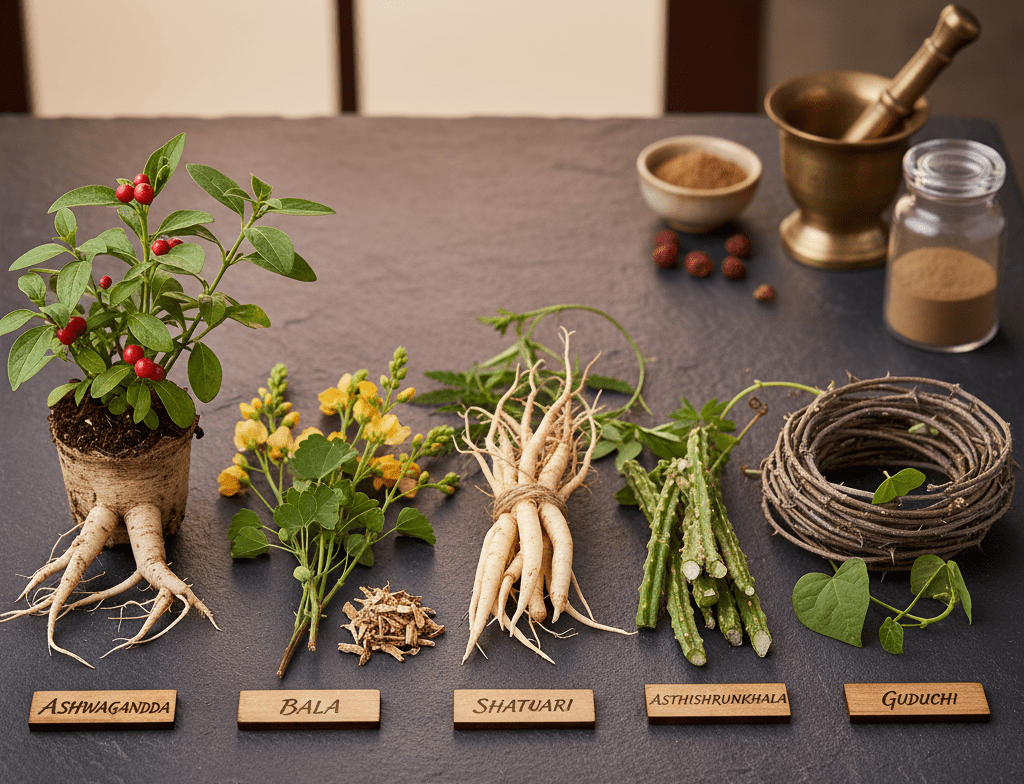
Common herbs useful in Osteoporosis
| Herb Name (Sanskrit & Botanical) | Ayurvedic Properties (Rasa, Virya, Dosha Effect) | Primary Action on Bone Health | Modern Research Insights |
| Ashwagandha (Withania somnifera) | Rasa: Bitter, Astringent Virya: Heating Dosha: Balances Vata & Kapha | A rejuvenating tonic (Rasayana) that nourishes and strengthens all tissues (dhatus), including bone. Reduces stress, which can contribute to bone loss. | Contains withanolides that may stimulate bone-forming cells (osteoblasts) and inhibit bone-resorbing cells (osteoclasts). |
| Arjuna (Terminalia arjuna) | Rasa: Astringent Virya: Cooling Dosha: Balances Kapha & Pitta | Traditionally used to promote fracture healing. It is a natural source of calcium compounds. | Analysis shows the presence of calcium. Animal studies suggest it may promote bone mineralization and reduce bone resorption. |
| Asthishrunkhala / Hadjod (Cissus quadrangularis) | Rasa: Sweet Virya: Heating Dosha: Balances Vata & Kapha | Directly supports bone healing and strength. The name itself means “bone-joiner.” | Extensively researched; shown to accelerate fracture healing by enhancing osteoblast proliferation and improving mineral retention. |
| Guduchi / Amrita (Tinospora cordifolia) | Rasa: Bitter, Astringent Virya: Heating Dosha: Tridoshic (Balances all three) | Acts as an anti-inflammatory and detoxifying agent, reducing inflammation that can lead to bone loss. | May protect bone by modulating the immune system to reduce inflammatory bone loss and promoting the differentiation of osteoblasts. |
| Shatavari (Asparagus racemosus) | Rasa: Sweet, Bitter Virya: Cooling Dosha: Balances Vata & Pitta | Especially useful for postmenopausal osteoporosis due to its phytoestrogenic properties, which can help mitigate bone loss from low estrogen. | Contains steroidal saponins that are considered to have estrogen-like effects, potentially helping to preserve bone mass after menopause. |
| Bala (Sida cordifolia) | Rasa: Sweet Virya: Cooling Dosha: Tridoshic (especially Vata) | Its name means “strength.” It is used as a general tonic to strengthen bones, muscles, and nerves. | Known for its anti-inflammatory and analgesic (pain-relieving) properties, which can help manage pain from fractures or severe osteoporosis. |
 FAMILY DOCTOR ONLINE