What is Rheumatoid Arthritis (RA)?
Rheumatoid arthritis (RA) is a chronic autoimmune disease that causes pain, swelling, and stiffness in the joints. In this condition, the body’s immune system, which normally fights off infections, mistakenly attacks the healthy tissue lining the joints (called the synovium).
Amavata – In Ayurveda, this condition is described as Amavata.
Causes of Rheumatoid Arthritis
1. Genetic Factors
Genetics play a significant role in determining a person’s susceptibility to RA. It’s estimated that genetic factors account for about 50% to 60% of the risk.
- Family History: Having a close relative (parent, sibling, or child) with RA increases your risk of developing the disease.
- HLA Genes (Human Leukocyte Antigen): Specific variations of these genes, are the strongest known genetic risk factors. These genes help the immune system distinguish between the body’s own proteins and foreign invaders. In susceptible people, these variations may cause the immune system to misfire.
- Other Immune-Related Genes: Many other genes involved in immune system function have also been associated with an increased risk.
2. Environmental Triggers and Risk Factors
Environmental and lifestyle factors are thought to act as “triggers” that activate the disease in people who are already genetically susceptible.
- Smoking: This is the most consistently identified and significant non-genetic risk factor. Smoking increases the risk of developing RA, especially the more severe, antibody-positive type, and it can also make the disease and its treatment less effective.
- Infections: Exposure to certain viral or bacterial infections (like the bacteria associated with gum disease/periodontitis) is suspected to trigger the autoimmune response, though a specific, confirmed infectious agent is not known.
- Obesity: Excess weight, particularly in younger individuals, is associated with a higher risk of developing RA, as fat cells release inflammatory proteins (cytokines) that promote systemic inflammation.
- Air Pollution: Exposure to air pollutants, such as fine particulate matter, may trigger inflammation and increase the risk or worsen symptoms.
- Occupational Exposure: Exposure to certain types of dust and fibers (e.g., silica) in the workplace may increase the risk.
- Stress: Severe physical or emotional stress, or trauma, is anecdotally and sometimes scientifically linked to the onset or flare-up of RA symptoms.
3. Hormonal and Biological Factors
- Sex: Women are about two to three times more likely to develop RA than men. The disease often starts during periods of hormonal change, such as after childbirth or near the onset of menopause, suggesting that sex hormones (like estrogen) play a role.
- Age: RA can occur at any age, but the risk increases as people get older, with the typical onset being between the ages of 40 and 60.
Common Signs & Symptoms
Common Symptoms include:
- Joint pain, swelling, and tenderness.
- Joint stiffness, which is often worse in the morning or after periods of inactivity and may last for an hour or more.
- Fatigue, fever, and loss of appetite.
- The symptoms can come and go, with periods of heightened symptoms known as flares followed by periods of lesser activity (remission).
Description of Amavata in Ayurveda
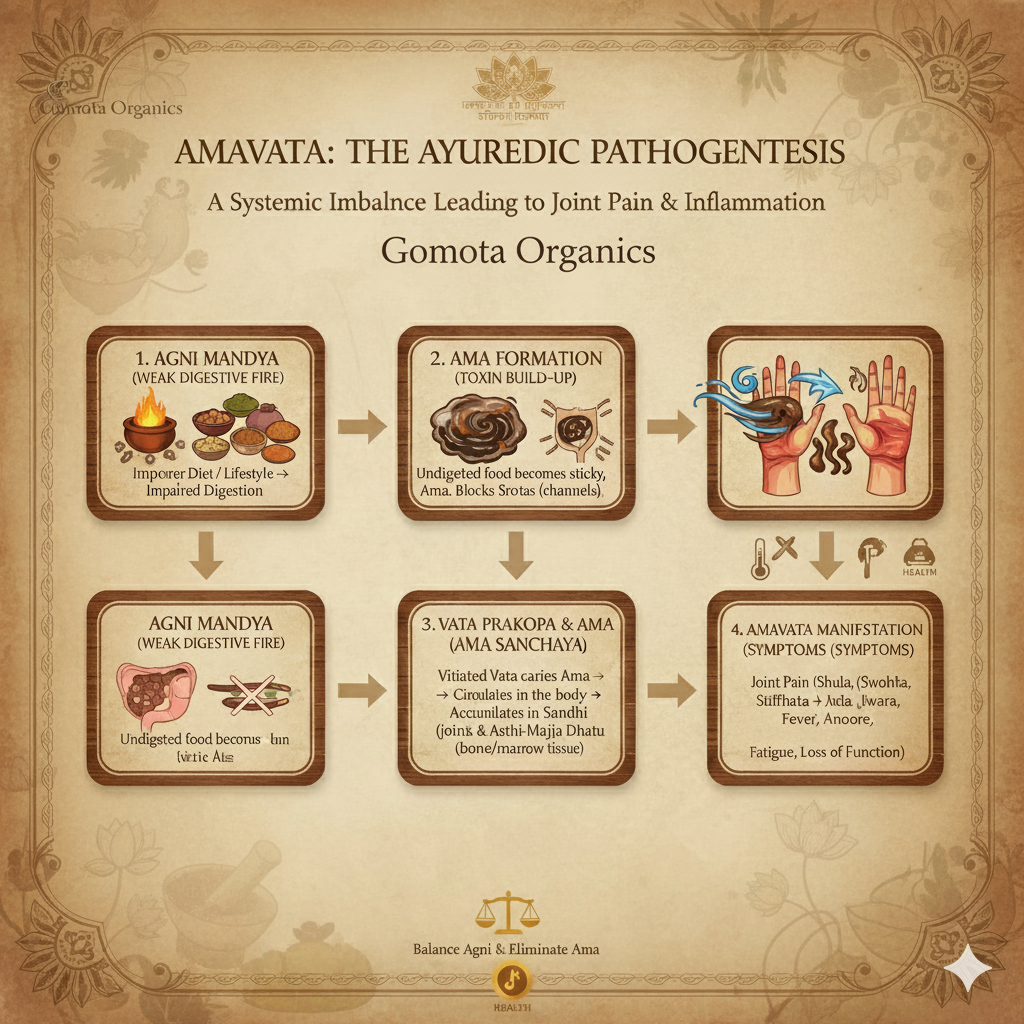
In Ayurveda, Amavata is a complex systemic disease that is often correlated with Rheumatoid Arthritis (RA) in modern medicine, due to the striking similarity in their symptoms and progressive nature.
The term Amavata is derived from two key concepts:
- Ama: This refers to the core pathogenic factor. Ama is essentially a toxic, undigested, or improperly processed substance formed in the body due to a weak digestive fire (Agni Mandya). Because it is sticky, it blocks the body’s channels (Srotas), preventing proper nourishment and waste removal.
- Vata: This is one of the three fundamental biological energies (Doshas) in Ayurveda, which governs all movement and nervous functions. In Amavata, the Vata Dosha is aggravated or vitiated.
The Ayurvedic Pathogenesis (How it develops):
- Impaired Digestion (Agni Mandya): The digestive fire becomes weak due to improper diet or lifestyle.
- Ama Formation: This leads to the formation of Ama (toxins/undigested material) in the stomach.
- Vata Vitiation: The aggravated Vata Dosha then pushes this circulating Ama and deposits it in the joints and other tissues, particularly the areas governed by Kapha Dosha (like the joints, which are known as Shleshmasthana).
- Disease Manifestation: The accumulation of Ama in the joints, combined with the vitiation of Vata, leads to the characteristic symptoms of Amavata.
Key Symptoms of Amavata (Similar to RA):
- Sandhi Shula and Shotha (Joint Pain and Swelling): Pain and swelling, which is often symmetrical (affecting both sides of the body).
- Sandhi Stabdhata (Stiffness): Severe joint stiffness, especially in the morning or after rest, often lasting for an hour or more.
- Angamarda (Body Ache): Generalized body pain or aches.
- Gaurava (Heaviness): A feeling of heaviness or lethargy in the body.
- Aruchi (Anorexia) and Apaka (Indigestion): Digestive disturbances like loss of appetite and indigestion, which are considered early signs.
- Jwara (Fever): Low-grade fever or general malaise.
Common herbs useful in RA
| Ayurvedic Name | Botanical Name | Key Action in Amavata |
| Guggulu | Commiphora mukul | Ama Pachana & Anti-inflammatory. This resin is central to Amavata treatment. It is warming, reduces Ama, scrapes toxins, and is a powerful anti-inflammatory agent. |
| Shallaki | Boswellia serrata | Anti-inflammatory & Analgesic. Contains Boswellic acids, which are scientifically proven to reduce inflammation and pain in the joints and improve joint mobility. |
| Haridra (Turmeric) | Curcuma longa | Anti-inflammatory & Antioxidant. The active compound, Curcumin, is a potent anti-inflammatory that helps reduce pain, swelling, and stiffness. It is often taken with black pepper for better absorption. |
| Shunthi (Dry Ginger) | Zingiber officinale | Deepana & Pachana (Digestive). It is warming, highly effective for digesting Ama, and reduces inflammation. It is often a key ingredient in formulas designed to treat Amavata from the very initial stage. |
| Ashwagandha | Withania somnifera | Immunomodulator & Adaptogen. Helps modulate the immune system, reduces inflammation, and strengthens the joints and tissues. It also helps the body cope with stress. |
| Guduchi (Giloy) | Tinospora cordifolia | Immunomodulator & Anti-inflammatory. Known as an immune-modulator, it helps regulate the immune response and reduces systemic inflammation. |
| Rasna | Pluchea lanceolata | Anti-rheumatic & Vata Pacifying. Primarily known for its potent anti-rheumatic qualities, it helps reduce joint pain and improves joint flexibility. |

Preventive Measures and Lifestyle Advice
Prevention:
| Measure | Rationale |
| Quit Smoking | Smoking is the strongest modifiable risk factor for RA. It significantly increases the risk of developing the disease and is associated with more severe symptoms and worse treatment outcomes. |
| Maintain a Healthy Weight | Obesity is a risk factor and can worsen RA severity. Fat cells release inflammatory proteins (cytokines), increasing systemic inflammation and stress on weight-bearing joints (knees, hips). |
| Protect Dental Health | Poor oral hygiene and gum disease (periodontitis) have been linked to an increased risk of RA, as the chronic infection and inflammation may trigger autoimmunity. |
| Avoid Environmental Exposure | Reducing exposure to air pollutants, industrial chemicals, and occupational dust (e.g., silica) may lower the risk of triggering the disease in genetically susceptible individuals. |
| Moderate Alcohol Intake | Excessive alcohol consumption is detrimental to health and can interfere with RA medications. However, some studies suggest moderate consumption, especially of wine, may be associated with a reduced risk of RA. |
Lifestyle:
For those living with RA, consistent lifestyle modifications are essential for controlling inflammation, reducing pain, and maintaining function.
A. Diet and Nutrition
An Anti-Inflammatory Diet, such as the Mediterranean Diet, is highly recommended.
- Increase Omega-3 Fatty Acids: Consume fatty fish (salmon, mackerel, sardines), flaxseeds, and walnuts. Omega-3s (EPA and DHA) have proven anti-inflammatory effects that can reduce joint swelling, pain, and morning stiffness.
- Focus on Antioxidants: Eat plenty of colorful fruits, vegetables, and whole grains (e.g., berries, leafy greens, brown rice). These foods are rich in antioxidants and fiber, which help combat inflammation and may lower markers like C-reactive protein (CRP).
- Use Anti-inflammatory Spices: Incorporate Turmeric (Curcumin), Ginger, and garlic into your cooking for their natural anti-inflammatory properties.
- Limit Inflammatory Foods: Reduce intake of processed foods, refined sugars, fried foods, excessive red meat, and high-salt foods.
B. Exercise and Physical Activity
Exercise is crucial for maintaining joint function and reducing overall disease activity.
- Low-Impact Aerobic Exercise: Activities like walking, swimming/water aerobics, and cycling are ideal as they keep the heart strong without stressing the joints.
- Range-of-Motion Exercises: Gentle stretching, Yoga, or Tai Chi helps to maintain flexibility, reduce morning stiffness, and improve balance.
- Strength Training: Use light weights or resistance bands to strengthen the muscles supporting the joints, which provides stability and protection.
- Listen to Your Body: Avoid high-impact exercises and overexertion, especially during a flare-up. Modify or skip any movement that causes increased pain.
C. Joint Protection and Self-Care
- Joint Protection Techniques: Learn to use the largest and strongest joints for tasks (e.g., carrying groceries with your forearms instead of your hands).
- Use Assistive Devices: Utilize ergonomic tools, jar openers, long-handled shoehorns, and wrist rests for computers to reduce strain on affected joints.
- Heat and Cold Therapy: Apply heat (heating pad, warm shower) to relax muscles and soothe stiff joints, and use cold (ice packs) to reduce swelling and numb acute pain during flares.
- Prioritize Rest and Sleep: Ensure quality sleep, as chronic pain and fatigue (common RA symptoms) are interconnected. A lack of sleep increases pain sensitivity.
D. Mental Health and Stress Management
- Manage Stress: Chronic stress can trigger RA flares and worsen inflammation. Practice stress-reduction techniques such as meditation, deep breathing, and mindfulness to help calm the immune system.
- Build a Support Network: Engage with supportive friends, family, or support groups to share experiences and receive emotional backing, which is vital for managing a chronic condition.
 FAMILY DOCTOR ONLINE